

Contents
- The Short Answer on Matching Hollywood Couples
- Inside the Shared Wardrobe Director's Deck
- How a Two-Shot Sells Stability Before the Caption Loads
- Chameleon Effect or Calendar Entry? Reading the Timeline
- Brass Buckles, Mirrored Hems, One Designer
The Short Answer on Matching Hollywood Couples
When two famous people start dating and, within weeks, step out of a restaurant in the same shade of chocolate suede, which force produced that frame? Did they slowly absorb each other's taste, or did someone with a clipboard decide it?
Here is the verdict up front. Synchronized dressing in Hollywood is overwhelmingly a deliberate, stylist-brokered strategy. It projects relationship stability, raises the syndication value of every sidewalk photo, and keeps two sets of brand ambassador contracts happy at once. Psychological mirroring is real, but it plays a secondary role, and mostly in pairings that have lasted long enough for habits to bleed across.
Three mechanisms do most of the work:
- Consolidated mood boards. Styling teams merge their references into a single visual deck so both partners satisfy dual-brand obligations during public outings.
- Photographability requirements. Paparazzi and photo desks reward couples who read as one coherent image.
- Romantic shorthand. A shared palette tells a scrolling audience "aligned" faster than any caption can.
The shift has a history. Editorial photo desks reviewing three decades of candid entertainment archives trace it from the spontaneous, unstyled grunge pairings of the 1990s to today's pre-cleared sidewalk walks. The turning point came when publicists realized unified couple aesthetics earned priority placement in digital syndication feeds. That move from off-duty dressing to hyper-curated choreography solidified over the 25-to-30-year span separating mid-1990s tabloid photography from recent press cycles.
Inside the Shared Wardrobe Director's Deck
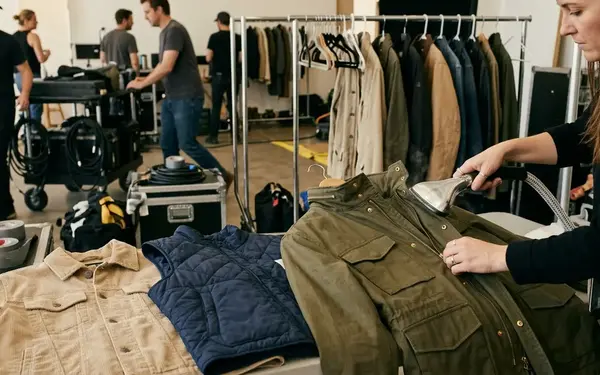
The logistics start before the first joint outing. Once a relationship is confirmed, the two representation teams typically merge communications or bring in a single shared wardrobe director for public appearances. One person now controls the visual story of two careers.
What that director avoids matters as much as what they pull. Identical his-and-hers garments are ruled out as overly theatrical; they read as a costume gag, and costume gags invite mockery. The current method is tonal and textural echoing. One partner wears an oversized leather trench. The other wears boots cut from the exact same grain and dye lot. To the casual eye, the outfits barely relate. In a photograph, under flash, the leathers catch light identically and the frame snaps together.
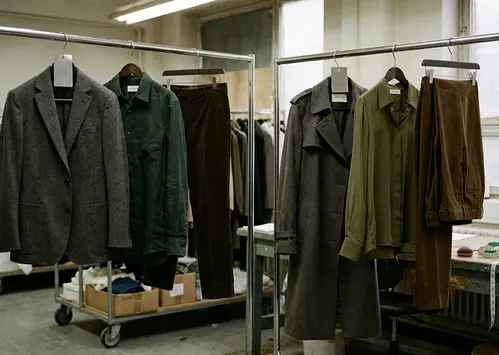
Compare that with how couples actually share clothes in private. Organic borrowing looks like a worn-in vintage hoodie migrating from one closet to another, faded at the cuffs, a size too big on the borrower. Nobody sourced it. Choreographed echoing involves requests to a showroom, matched metallic hardware, and leather traced back to a single tannery batch. The first is a habit. The second is a procurement process.
The calendar behind the coordination
Timing gives the game away. Joint styling teams lock in complementary bespoke tailoring lookbooks 14 to 21 days before major film promotion cycles. Hoodie-borrowing has no lead time at all.
The commercial incentive is just as concrete. A shared director can negotiate simultaneous showroom loans from one luxury house, dressing both partners in a single label. The payoff is a double-credit brand moment: entertainment news publications name the house twice in one caption, attached to two famous faces, in a story framed as romance rather than advertising.
Read the Dye Lot
Literal matching usually signals a joke or a fan moment. Near-identical leather tone across different garments, especially paired with the same hardware finish, is the stronger marker of a coordinated pull.
How a Two-Shot Sells Stability Before the Caption Loads
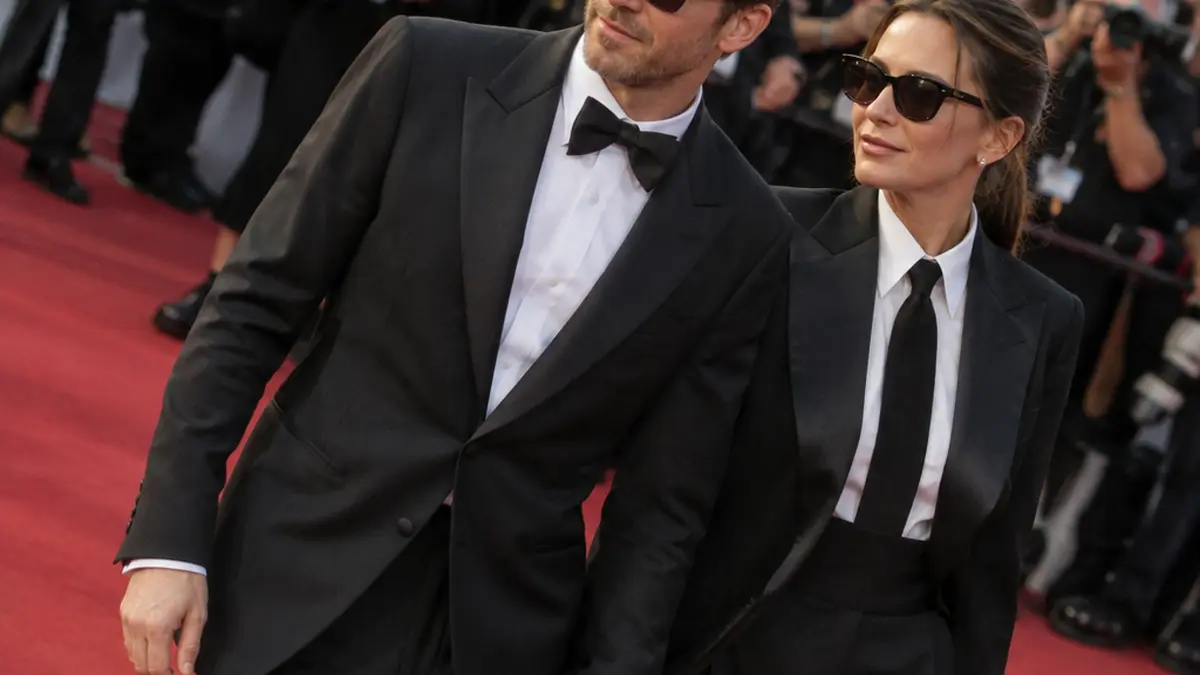
Street style photography now functions as a primary narrative tool in entertainment journalism. A couple who looks visually cohesive reads as stable before a viewer processes a single word of the caption. The image makes the argument; the text only confirms it.
Syndication agencies and photo editors know this, and they choose accordingly. They prioritize two-shots where both subjects share a palette and a formality level. Desks learned the hard way that publishing clashing aesthetics, say full eveningwear beside gym clothes, derails the intended narrative into speculation about friction. A mismatched frame gets captioned as trouble, whether or not any trouble exists.
Composition explains why. A vertical two-shot, the format built for phone feeds, needs balanced visual weight across both halves. Synchronized high-fashion tailoring delivers that balance. A tuxedo next to a sweatsuit splits the frame into two separate stories, and the eye reads the split as distance.
Speed compounds the effect. Photo agencies distribute cleared sidewalk two-shots to entertainment news desks within 2 to 4 hours of a staged dinner exit. That window leaves little room for nuance. The first image to circulate sets the narrative, so the outfit has to carry it alone.
Wardrobe shifts as era announcements
Couples also use sudden changes in dress to mark a new chapter. A pair photographed for months in loose casual streetwear who reappear in coordinated tailoring are making a statement aimed partly at the industry: take us seriously, we are now a professional unit. The trajectory of the clothes becomes a press release with no text.
Chameleon Effect or Calendar Entry? Reading the Timeline
None of this means couples never genuinely converge. Partners do drift toward each other's habits, adopting the sartorial preferences of someone they admire or defer to, much as people unconsciously mirror posture and speech. Clothing also shapes the wearer: the research on enclothed cognition examined how what we put on can influence how we think and perform. Taken together, mirroring and enclothed effects give organic convergence a plausible psychological basis.
So the question becomes diagnostic. Fashion observers and behavioral analysts separate the two by auditing the timeline of a sartorial shift against relationship milestones.
- Scope of change. Does one partner gradually adopt pieces of the other's style, such as a shift in denim cut or a new footwear preference? Or does a head-to-toe overhaul arrive alongside a joint contract?
- Speed of change. PR-driven overhauls typically manifest within 10 to 14 days of a relationship going public. Organic chameleon effects emerge gradually, across 6 to 18 months of partnership.
- Sourcing. Mixed labels and visibly worn garments point toward real borrowing. Single-house exclusivity points toward a negotiated loan.
In my own archive work, the overnight cases are rarely ambiguous: the before-and-after frames often sit only a couple of weeks apart, and the change runs from collar to shoe.
Where the Lens Stops
These criteria are heuristics built from public photographs, which means they only ever see the curated slice of a life. A fast overhaul can coincide with a genuine change of taste, and a slow one can be planned. Treat the timeline as evidence, never as proof.
A hard boundary applies here. Visual street style analysis stops at the curb. Unphotographed off-duty habits inside gated residences sit entirely outside the reach of archival fashion reporting. Even the most meticulously coordinated red carpet appearance cannot validate the private emotional health of a partnership. It functions strictly as external brand projection, and reading it as anything more is fan fiction with a photo credit.
Brass Buckles, Mirrored Hems, One Designer
The coffee run is no longer casual. Publicists and showroom directors turned the routine dinner exit into a secondary red carpet by applying campaign-shoot lighting and framing standards to ordinary sidewalks. Every walk to the car is now treated as a potential editorial.
The labor behind it is measurable. For a coordinated 3-to-5-day press-tour street walk, showroom pull requests and custom tailoring fittings require 48 to 72 hours of advance preparation by the shared styling assistant. The spontaneity you see in the frame was booked days earlier.
Three operational markers identify a staged walk:
- Matched metallic hardware. Identical brass buckles, zips, or chain details across both outfits.
- Mirrored silhouette proportions. Both partners in long-over-slim or cropped-over-wide shapes, so the two figures echo each other in outline.
- Single-designer exclusivity. One house dressing both halves of the frame, head to toe.
Three-Marker Sidewalk Check
One marker alone can be coincidence. When hardware, proportion, and label all line up in the same shot, you are almost certainly looking at a pull sheet rather than a shared closet.
Once you know the markers, the sidewalk reads differently. The next time a newly minted Hollywood pair steps out in perfectly complementary leather and coordinated neutrals, will you read it as the natural harmony of two people in love, or will you go looking for the single stylist credit linking both halves of the frame?







Your Thoughts
No comments yet. Be the first!
Your Comment