


What the Seating Matrix Actually Measures
Which metrics decide who lands in the first row at a global fashion week, and who ends up two rows back, sightline severed by a photographer's shoulder?
The answer is less glamorous than the venue suggests. The front row operates as a corporate billboard with chairs, priced in visibility rather than dollars, and every seat on it has been argued over by people holding spreadsheets. PR directors build the baseline by cross-referencing editorial mastheads against active ambassador contracts, then layering in immediate social reach as a third variable. Nobody is seated because they looked charming at the last dinner.
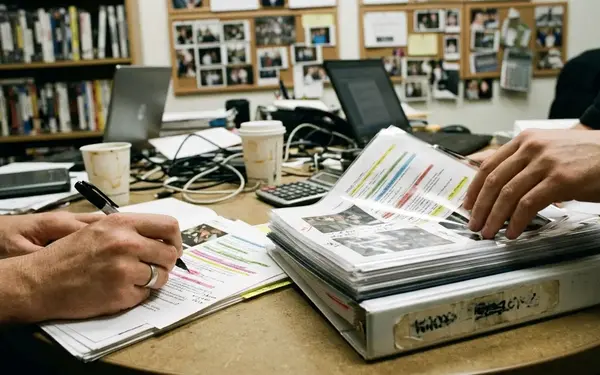
The working document is usually a color-coded seating matrix that maps editorial authority on one axis and real-time distribution power on the other. A print editor-in-chief with limited personal following occupies a different color block than a musician with a signed campaign deal and a nine-figure audience. Both may sit in the same row. They are there for entirely separate reasons, and the matrix knows it.
Timing tells you how contested the space is. Initial assignments get sketched weeks out, but the primary chart is only finalized in the last three or four days before the presentation, which is precisely how long it takes for last-minute ambassador confirmations, flight cancellations, and rival-brand conflicts to shake out. A seat that looks permanent on Monday can change hands by Wednesday afternoon.
Seat Chart Reality
Three inputs govern placement: masthead authority, contractual obligation, and syndication reach. A guest strong in one column can be seated ahead of a guest moderately strong in all three, depending on what the house needs photographed that season.
How Publicists Carve Up the Room
Walk a venue during load-in and the hierarchy is already physical. Venue coordinators assign specific runway sectors to distinct geographic regions, so the Asian market press corps has a dedicated sightline that does not compete with European wholesale buyers or American digital media. It is territorial mapping before it is social ranking.
The photo-call zone gets its own treatment. It is divided into three distinct tiers based on proximity to the runway entrance, and the difference between tier one and tier three is the difference between a syndicated frame and a wasted memory card. Tier one shooters get the clean full-length as the guest steps out of the car. Tier three gets elbows.
- Tier one: closest to the entrance, unobstructed arrival frames, wire-service priority.
- Tier two: secondary angles, useful for candid interaction shots between guests.
- Tier three: volume coverage, rarely the image that travels.
Initial seating assignments typically lock between 14 and 21 days before the presentation, which gives stylists a working runway of roughly three weeks to finalize looks against a confirmed position. Move someone from row one to row three inside that window and you have effectively invalidated an outfit that was chosen for how it reads from a fixed camera position.
The composition of the front row has shifted hard. Retail buyers and legacy editors once anchored the prime seats because they controlled the order book and the September issue. Digital-native talent now competes for the same real estate, and in several houses has displaced it outright. Buyers still attend. They are frequently seated where the cameras are not.
The pattern is not uniform, though. Paris retains a heavier weighting toward print heritage and institutional editorial presence, while New York skews commercial and rewards immediate conversion. And this strict geographic, tier-based hierarchy applies primarily to the major global fashion capitals — emerging regional showcases run a far more fluid arrangement, seating industry insiders by relationship rather than by matrix.
Ambassador Contracts, Archival Pulls, and Arrival Windows
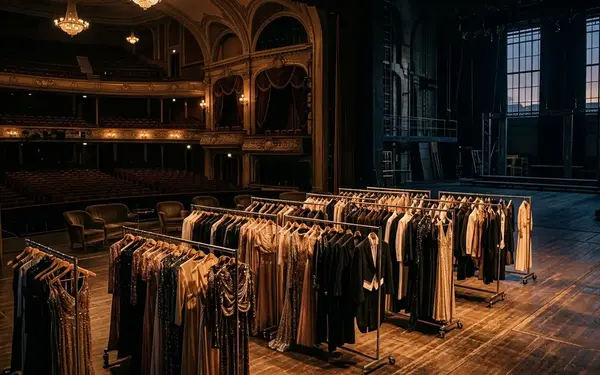
The outfit sitting in seat A1 was negotiated, not selected. Stylists and brand representatives work months ahead, matching the ambassador's established personal aesthetic against the overarching narrative of the collection being shown. On one recent cycle the initial plan across a full ambassador roster was head-to-toe current season, uniform and clean; the final approach integrated coveted archival pulls for a subset of guests, specifically to signal historical continuity between the new collection and the house's own back catalogue.
Both strategies do real work. Current-season dressing drives immediate commercial recognition, because the garment on the guest is the garment that will hit the floor. An archival pull, by contrast, generates editorial and fan-forum discourse, positions the wearer as a scholar of the house, and quietly argues that the brand has a history worth excavating. Houses running a heritage-forward narrative lean archival. Houses defending a commercial quarter lean current.
The Obligations Nobody Prints
Ambassador contracts specify logistics with a precision that surprises people who assume the arrival is spontaneous.
- Arrival timing: stipulated windows of 15 to 25 minutes before the show begins — early enough for full photo coverage, late enough that the guest is not photographed waiting.
- Paparazzi interaction: mandatory engagement zones spanning 10 to 15 meters at the venue entrance, walked at a pace that yields usable frames rather than blur.
- Posting embargoes: contractual restrictions holding all social media content until the final runway walk concludes, so the collection is never previewed by a guest before the house reveals it.
That embargo clause is the most consequential of the three. It converts hundreds of individual accounts into a synchronized release valve, and it explains why a wave of near-identical posts hits your feed within the same minute after a show ends.
Archival Pull Timing
Requests for archive garments move on a far longer lead than showroom samples. If a look requires a piece from the house archive, that conversation happens well before seating is locked, because conservation approval and fit adjustment cannot be compressed into the final week.
What a Front-Row Seat Returns to the House
Marketing teams treat prime seating as a media buy with logistics attached. The calculation weighs the immediate global visibility generated by candid entertainment photography against the hosting cost of a high-profile attendee: travel, accommodation, security, styling support, and the fee where one exists.
Social currency gets measured concretely. The primary metric is the volume of candid street style photographs syndicated globally — how many outlets, how many territories, how many secondary republications. Viral moments, whether from the red carpet or from the sidewalk just outside the door, are tracked across a 48- to 72-hour window following the event. After that, attention has moved to the next show.
Here is what makes the arithmetic favor the house: the sidewalk frame frequently outperforms the runway frame. Working the entrance pit across a run of recent cycles, I have watched a single unposed arrival shot — guest mid-stride, coat catching wind, no styling team in frame, travel farther in a day than the entire official look book. Candid photography reads as evidence rather than advertising, and audiences reward it accordingly.
The relationship runs both directions. A brand receives distribution it could not purchase at equivalent credibility. Attendees receive cultural placement, industry validation, and a documented association with a house that carries its own status weight. Neither party is doing the other a favor, which is exactly why the negotiations are so exacting.
Livestreams, Embargoes, and the Next Definition of VIP
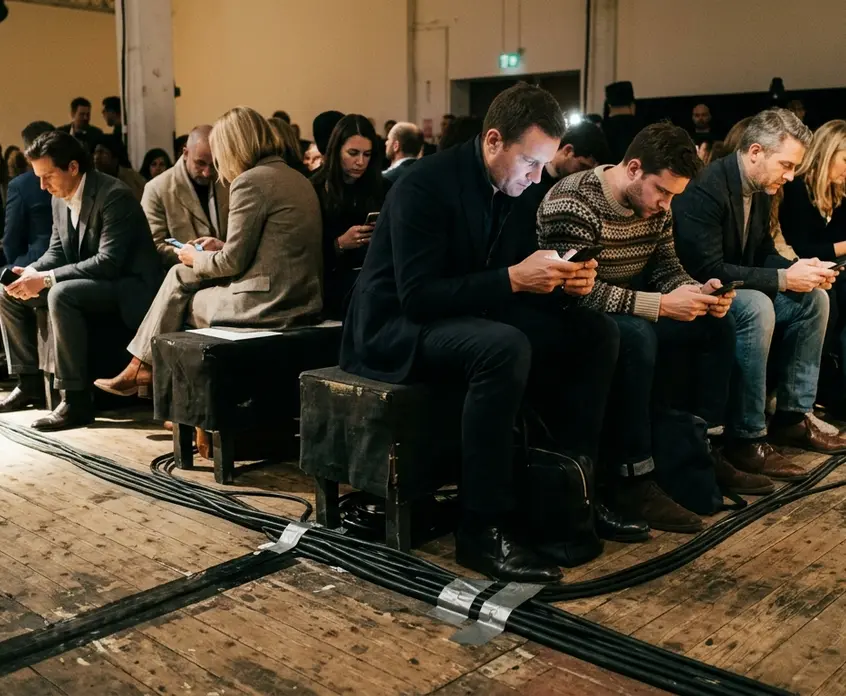
A physical runway presentation runs 12 to 18 minutes. Millions of people now watch that same window in real time, from a phone, for free, with better sightlines than tier-three seating provides. Digital strategists have started integrating live broadcast engagement metrics with physical attendance records, and the two datasets do not always agree about who mattered.
Tension follows. Livestreaming democratizes the collection; the physical event survives on scarcity. A house needs both, and the seating chart is where the contradiction gets resolved every season, chair by chair.
Editorial hierarchies have visibly reordered across the past several fashion cycles. Platforms that did not command a seat two years ago now command a named one. Short-form video creators sit where a wholesale director once sat. The category label "VIP" has stopped describing a fixed group and started describing whoever can move attention fastest in the days after the last model exits.
Pit-Side Signal
Watch where the tier-one photographers pivot when a guest arrives. Their lens direction is a live readout of the seating chart's real priorities, updated faster than any press release.
So the question lands back on you, whether you read fashion from the pit or from a feed at midnight: when a broadcast delivers the collection to millions in real time, does that front-row chair still hold the ultimate leverage in this industry — or has genuine influence already relocated to people who were never on the seating chart at all?







Your Thoughts
No comments yet. Be the first!
Your Comment