

The High-Stakes Ecosystem of Hollywood Fashion
Modern red carpet fashion operates as a calculated narrative tool where every garment serves a specific promotional or branding purpose. Treating celebrity styling as mere wardrobe choice misses the multi-million dollar machinery at play. Understanding this ecosystem is what decodes how actors secure leading roles, consolidate executive power, and win Academy Awards. The red carpet functions as a high-stakes visual negotiation, broadcasting an actor's market value and artistic ambitions to studio executives and the voting bodies of major guilds.
Through the 2020–2022 award cycles, styling teams mapped out multi-month visual trajectories for promotional tours. They deliberately rejected standalone couture pieces that failed to align with the actor's broader campaign narrative. A beautiful dress holds no value if it contradicts the thematic core of the film being promoted. Stylists act as visual dramaturgs, ensuring the press tour wardrobe acts as a prologue to the performance itself.
The logistics required to execute these cohesive narratives are staggering. Coordinating somewhere in the range of 14 to 18 distinct wardrobe changes per press junket requires dedicated logistics teams solely for international garment transport. These teams manage customs carnets, secure specialized insurance policies for archival pieces, and coordinate secure transport across multiple borders. Every appearance, from morning talk shows to evening premieres, demands a distinct look that advances the overarching campaign strategy while adhering to strict embargoes set by luxury fashion houses.
Navigating the Promotional Circuit
The rigorous press circuit for the 2021 biographical film The Eyes of Tammy Faye illustrates the sheer scale of modern campaign dressing. Jessica Chastain's portrayal of televangelist Tammy Faye Bakker received support from a highly strategic public appearance campaign, culminating in her winning the Academy Award for Best Actress in 2022. Wardrobe curators for the press tour selected garments that subtly mirrored the subject's historical evolution without crossing into literal costume territory. The goal was to evoke the era and the character's flamboyant spirit while maintaining the actor's contemporary high-fashion status.
Executing this vision required scheduling shy of 45 individual fittings across three time zones during the opening months of 2022. That intense schedule accommodated the lead actress's concurrent filming schedule for a romantic comedy. The styling team operated as a mobile atelier, adjusting hems and altering silhouettes in hotel rooms and production trailers. They maintained a continuous dialogue with designers to ensure each custom piece arrived precisely when needed, regardless of the geographic location.
Contrast these high-profile award campaigns with the on-the-ground reality of production. During the early 2022 NYC filming period for Something from Tiffany's, lead actress Zoey Deutch worked alongside co-stars Kendrick Sampson and Ray Nicholson under entirely different logistical constraints. The daily grind of location shooting leaves little room for the expansive wardrobe curation seen on the award circuit. Actors on set are focused on continuity and character, far removed from the polished veneer of a global press tour.
Studio Campaign Logistics This intensive level of wardrobe coordination is strictly viable for lead actors backed by major studio campaign budgets. Independent film promotions rarely possess the capital to secure dedicated international styling logistics.
Adapting to Virtual and Live Stages
The industry pivoted sharply during the pandemic, forcing a complete reevaluation of how fashion translates through a screen. The November 2020 MTV Europe Music Awards, held virtually due to COVID-19, serves as a prime example of adapting fashion for digital consumption. Pop singer Madison Beer arrived in a Vivienne Westwood brown satin corset dress featuring a structured bodice and asymmetrical draping. She later switched to a Mugler white cutout mini dress.
To adapt to digital-only broadcasts, styling teams prioritized upper-body structural details and high-contrast fabrics that would read clearly on camera. Subtle textures and dark, monochromatic palettes often turn into flat silhouettes on standard broadcast feeds. The absence of a physical red carpet meant the garments had to generate their own visual momentum without the benefit of movement or natural light.
Fitting schedules from that autumn show a three-camera lighting test built into the process. This technical rehearsal ensured the asymmetrical draping and white cutout details maintained visual integrity under broadcast ring lights. Stylists had to account for compression artifacts, varying screen resolutions, and the harsh, often unforgiving nature of continuous studio lighting. These specific designer choices maintained high visual impact even without a traditional physical red carpet. The virtual stage demanded a hyper-focused approach to garment construction, where every seam and cutout had to perform flawlessly under intense, multi-angle illumination.
The Battle of Aesthetics: Quiet Luxury to Executive Power
Personal branding through fashion requires precise aesthetic calibration. Fashion influencer and model Sofia Richie, daughter of singer-songwriter Lionel Richie and Diane Alexander, aligned her public image with the 'Quiet Luxury' aesthetic. This style relies on understated, logo-free high-end tailoring and neutral palettes. It stands in direct contrast to the vibrant, pink-dominated maximalist 'Barbiecore' favored by figures like Paris Hilton.
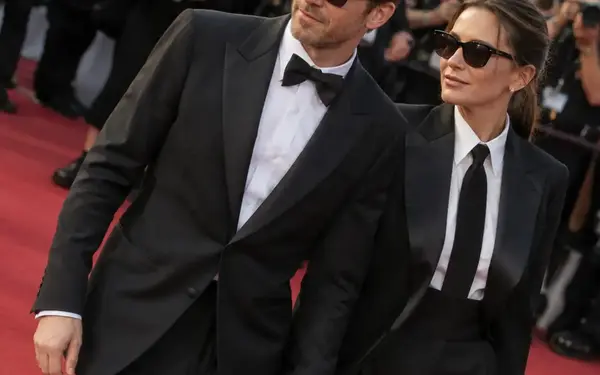
Public relations teams orchestrated this strategic pivot to visually signal a client's transition from influencer status to executive producer credibility. Moving from maximalist pink aesthetics to logo-free executive tailoring demands immense technical execution. Across 2022, styling teams procured upward of 20 bespoke, logo-free tailored suits in neutral palettes, each requiring an average pushing 65 hours of hand-finishing. The absence of logos places the entire burden of luxury on the cut, the drape, and the quality of the textile. Every stitch must be flawless, as there are no bold prints or oversized hardware to distract the eye.
This sophisticated aesthetic shift mirrors Hollywood power dressing at the highest levels. Reese Witherspoon leverages this exact visual language in her role as both executive producer and actress portraying Bradley Jackson alongside co-star and fellow executive producer Jennifer Aniston in the Apple TV+ drama series The Morning Show. The wardrobe choices in these contexts are declarations of authority. A tailored suit becomes a uniform of control, signaling a shift from being the subject of the camera to the one directing the narrative. It communicates competence, stability, and a mastery of the industry's unwritten rules.
The Custom Statement
Bespoke garments possess the unique power to honor specific industry legends while meeting rigorous performance demands. A musician's styling team collaborated with a luxury atelier to engineer a performance garment that honored a legacy artist's aesthetic while allowing full physical mobility on stage. The engineering phase, running across the second half of 2021, focused heavily on mobility testing for a 144-appliqué sheer lace catsuit.
Ateliers integrated 144 individual floral embroidery appliqués onto a sheer, four-way stretch lace base. The textile architecture had to withstand the physical stress of a live acoustic performance without compromising the delicate visual homage. Every appliqué was strategically placed to allow maximum stretch across the shoulders and torso, ensuring the musician could play their instrument without restriction. The garment had to function as both a piece of high-fashion art and high-performance athletic wear. That tension between aesthetic beauty and structural integrity requires a mastery of both traditional couture techniques and modern textile science.
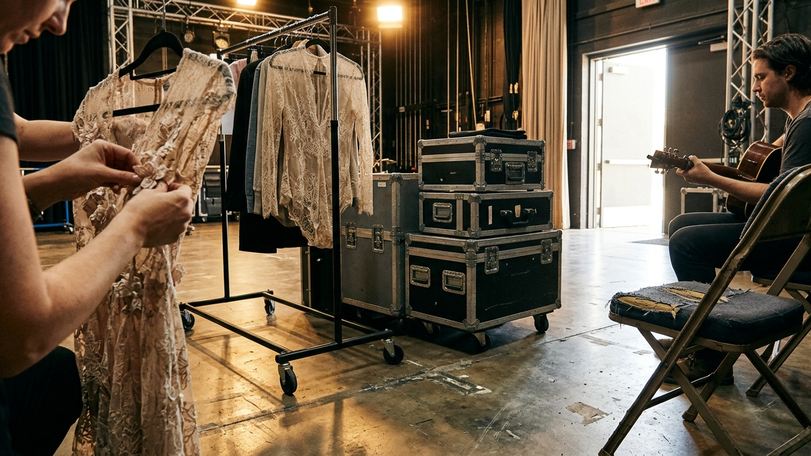
On October 30, 2021, at the 36th Annual Rock & Roll Hall of Fame Induction Ceremony, Taylor Swift performed 'Will You Love Me Tomorrow' to honor 2021 inductee Carole King, wearing a custom Sarah Burton for Alexander McQueen 'wicked lace catsuit'—a sheer second-skin garment detailed with floral embroidery, a mock neck, and integrated gloved sleeves.





Your Thoughts
No comments yet. Be the first!
Your Comment