
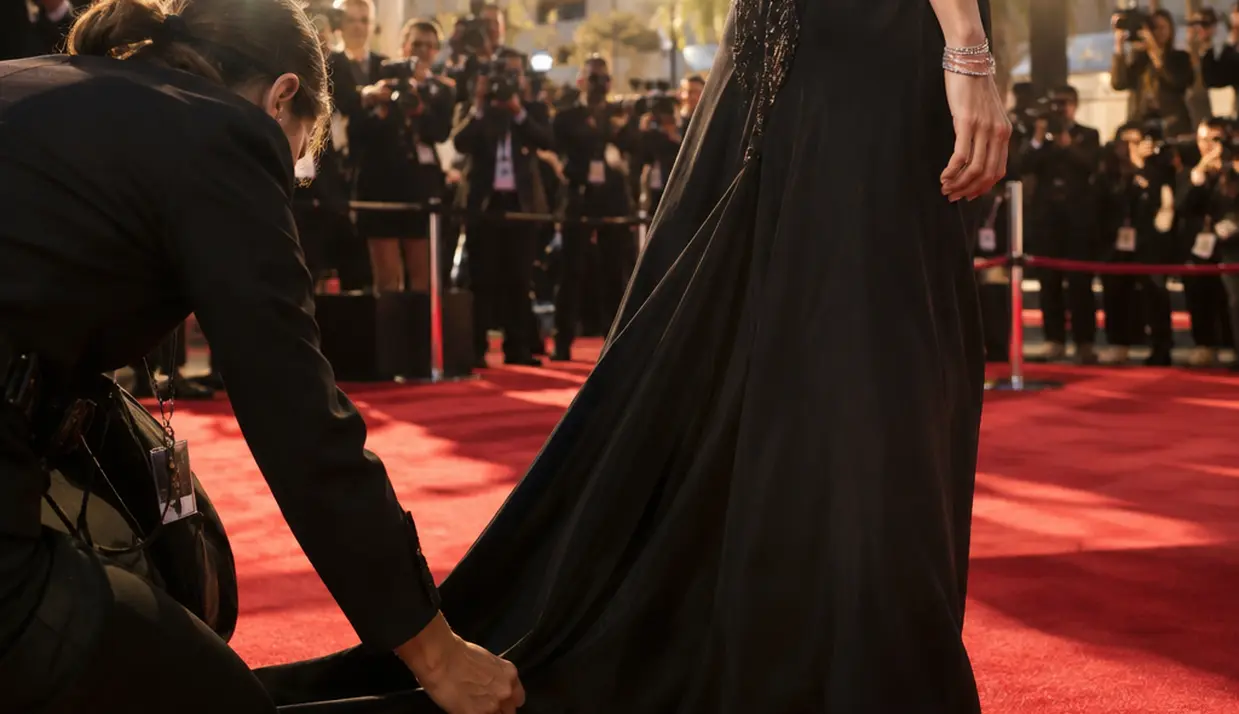

From the Step-and-Repeat to the Balance Sheet: The Immediate Verdict
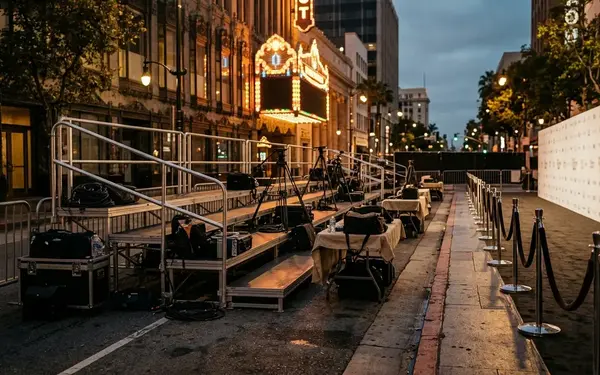
Strobe lights fracture across heavy silk crepe as an A-list nominee steps onto the velvet carpet of a major awards broadcast. Three thousand miles away, inside a cramped Garment District studio, four pattern makers crowd around a single laptop screen to watch the live feed. For an independent fashion house, this sixty-second walk along the step-and-repeat barrier represents the culmination of weeks of speculative labor. A single high-profile red carpet placement functions as an instant catalyst for earned media value, organic search surges, and wholesale buyer inquiries.
Entertainment fashion archivists trace a gown's trajectory from the instant raw wire images hit agency servers, logging metadata tags before digital fashion editors syndicate the high-resolution files across international style portals. Photographic wire services transmit compressed preview files from the step-and-repeat carpet to subscribing editorial desks within 90 to 180 seconds of the shutter click. Independent atelier teams monitoring live broadcast feeds typically observe concurrent active user spikes on their direct-to-consumer platforms within 4 to 7 minutes of an on-screen credit mention.
Translating that visual exposure into balance-sheet stability depends on three primary financial levers:
- Earned Media Value (EMV) and Media Impact Value (MIV) algorithms: Quantitative frameworks that measure digital press syndication and social reach to establish baseline brand awareness.
- Direct-to-consumer site traffic spikes: Short-window organic search surges that test a brand's technical infrastructure and ready-to-wear merchandising strategy.
- Long-term brand equity valuation: The use of archival celebrity imagery during seasonal market weeks to secure multi-door commitments from luxury department store buyers and attract venture capital interest.
Deconstructing Earned Media Value and Media Impact Algorithms
Quantifying the financial return of a celebrity dressing moment requires separating publicity metrics from liquid capital. Drawing on media valuation models, the assessment of a placement rests on cross-referencing publication tier, circulation reach, and visual prominence. Algorithmic tracking models evaluate digital placements by measuring pixel ratios, headline inclusion, and backlink authority across 300 to 500 monitored lifestyle and entertainment domains.
Different media formats carry vastly different longevity weights within these models. Syndicated wire photographs remain in active editorial rotation across global digital publications for 14 to 21 days following a major broadcast, whereas social media story mentions expire after 24 hours. While a celebrity tagging an emerging designer on a personal social account generates immediate fan engagement, an archival wire image embedded in international entertainment news portals builds enduring domain authority and search engine visibility.
Placement context alters the algorithmic multiplier applied to the visual asset. Comparing step-and-repeat wire syndication latency versus on-stage acceptance trophy framing multipliers reveals how broadcast mechanics dictate valuation. An arrival photo captured on the press line competes with hundreds of concurrent looks uploaded to agency servers. Conversely, when a nominee accepts a trophy on stage, the garment remains in continuous broadcast framing before a global audience, and the resulting wire photographs become permanent historical records of the ceremony.
Red Carpet Valuation Realities: Earned Media Value and Media Impact Value represent theoretical advertising rate-card equivalencies rather than liquid revenue, meaning a multi-million-dollar valuation figure provides zero direct cash flow to offset an independent label's immediate payroll or textile invoices.
Even when an independent label secures a certified viral placement on a major category winner, those algorithmic impressions only convert into commercial solvency if the studio possesses the operational architecture to capture subsequent consumer intent.
Search Velocity and the Forty-Eight-Hour Traffic Bottleneck
Consumer curiosity follows a predictable chronological sequence during live broadcasts. Television viewers witness the arrival, turn to social media feeds for designer attribution, and immediately execute organic search queries for the label's name. The primary consumer search velocity window peaks sharply within the first 36 to 48 hours post-broadcast before tapering back to baseline organic levels.
Independent houses frequently fail to monetize this surge due to severe operational friction. When an emerging label lacks e-commerce infrastructure or ready-to-ship inventory, the search spike dissipates into uncaptured browser sessions. Visitors arriving at a digital storefront that displays only bespoke editorial lookbooks or out-of-stock runway pieces exit within seconds.
To prevent high-intent search traffic from bouncing upon encountering bespoke couture pricing, emerging studio directors configure dedicated landing pages ahead of the broadcast, routing visitors directly to ready-to-ship leather goods and diffusion pieces instead of custom runway lookbooks.
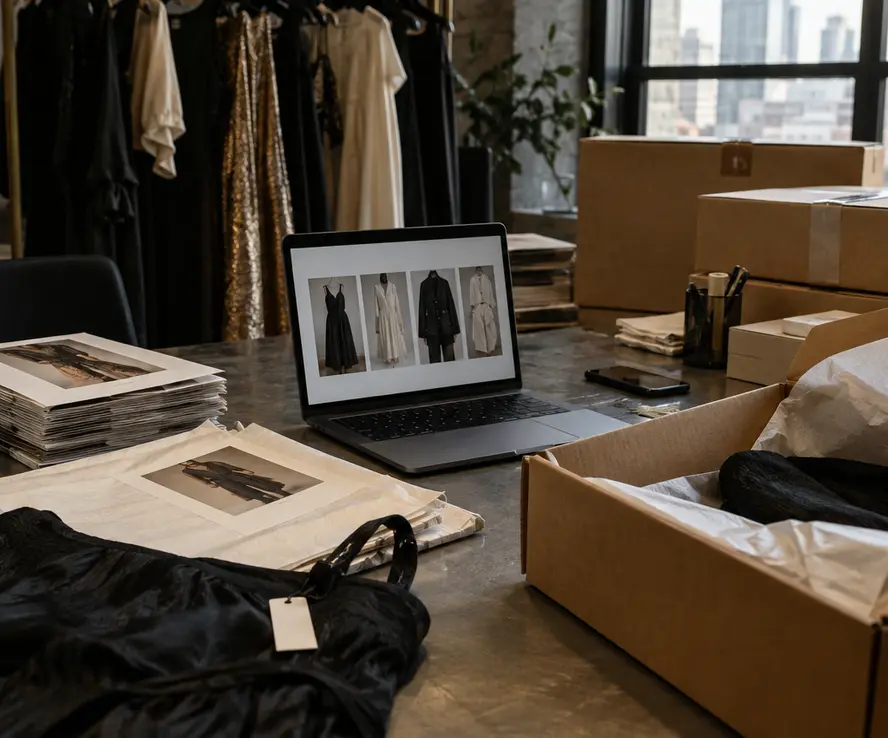
Technical and Merchandising Readiness Requirements
- Cloud Server Auto-Scaling: Digital storefronts must configure server capacity capable of handling 10 to 15 times normal concurrent session loads to prevent checkout crashes during the initial 4-to-7-minute broadcast traffic spike.
- Entry-Level Price-Point Architecture: Capturing impulse checkout conversions during broadcast surges requires entry-level catalog items priced between $150 and $450, such as small leather goods, branded hosiery, or diffusion knitwear.
- Pre-Order Landing Funnels: For variations of the red carpet silhouette, automated pre-order pages with transparent production lead times allow labels to collect deposits while gauging manufacturing demand.
The Hidden Ledger of Custom Atelier Production and Stylist Pulls
Securing a placement on an A-list talent requires navigating an asymmetric financial landscape. Heritage luxury conglomerates dominate the red carpet through paid celebrity dressing contracts, guaranteeing that contracted ambassadors wear their couture creations to major ceremonies. Independent designers rely instead on organic editorial pulls, where a celebrity stylist requests a garment purely for its aesthetic impact. A federal economic analysis of the fashion industry highlights the capital-intensive nature of small-batch apparel production, a financial pressure that intensifies during award season.
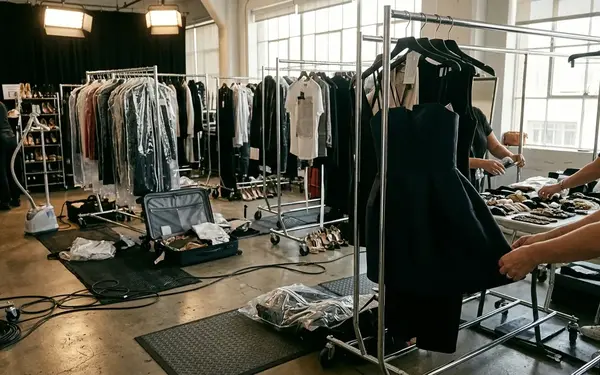
When a celebrity stylist requests multiple custom options for a single client, independent creative directors must weigh the upfront capital drain of bespoke pattern drafting and courier fees against the probability of the garment being left on the hotel dressing room rack during the final fitting. Producing a single custom red carpet gown requires 120 to 250 hours of specialized hand-draping, internal corsetry construction, and seam finishing within an independent studio. Upfront out-of-pocket expenses for luxury silk yardage, international bonded courier transit, and bringing a dedicated seamstress on location for final fittings within the 24 to 72 hours preceding the carpet run between $4,500 and $18,000 per look.
This financial exposure culminates in the hemmed-but-unworn hotel fitting attrition risk for non-contracted independent ateliers. Stylists routinely call in five to ten custom or runway options per client to accommodate last-minute changes in jewelry loans, hair styling, or personal mood. When an independent label's gown is cut during the final dressing room edit, the studio absorbs the entirety of the production and transit costs without receiving a single wire photograph in return.
Converting Fleeting Viral Moments into Sustained Brand Valuation
Long-term financial recovery from custom atelier investments occurs weeks after the velvet carpet is rolled up. Wholesale showroom appointments occur 4 to 8 weeks after major entertainment broadcasts during the seasonal market calendar in Paris and New York. During subsequent wholesale market weeks, showroom sales directors compile verified red carpet wire tear sheets into buyer pitch decks, using proof of celebrity validation to negotiate minimum order quantities and floor placement with international luxury department stores.
Retail buyers view high-profile red carpet placements as de-risking mechanisms. When a department store commits to an emerging designer, the buyer relies on established cultural visibility to drive full-price sell-through on the retail floor. Independent labels leveraging high-visibility red carpet placements during buyer negotiations typically target opening wholesale orders ranging from 15 to 40 units per commercial SKU across 5 to 12 new international stockists.
Sustained visibility across multiple award seasons transitions an emerging house from a one-off viral curiosity into an institutional acquisition target or venture capital prospect. Investors evaluating early-stage luxury brands scrutinize a studio's ability to generate organic editorial and red carpet momentum without relying on unsustainable digital ad spend.
Award Season Operational Preparation Checklist
- Establish Stylist Pull Caps: Limit custom bespoke production to stylists who guarantee a confirmed fitting slot and provide precise body measurements at least three weeks prior to the ceremony.
- Stage Diffusion Inventory: Manufacture or allocate ready-to-ship stock of $150 to $450 accessories before the broadcast airs.
- Stress-Test Hosting Architecture: Configure automated cloud bandwidth scaling to absorb sudden 15x session multipliers.
- Prepare Wholesale Lookbooks: Reserve space in market week pitch decks to insert licensed high-resolution wire photographs immediately following the broadcast.
Six weeks after the ceremony, inside a sunlit showroom in the Marais district of Paris, a senior buyer from an international luxury department store flips through a tablet display. She pauses on a high-resolution wire photograph of the silk crepe column gown captured on the broadcast stage, then reaches across the wooden table to examine the commercial rack of ready-to-wear silk blouses hanging beside her, pulling three styles to initiate an opening floor order.








Your Thoughts
No comments yet. Be the first!
Your Comment