

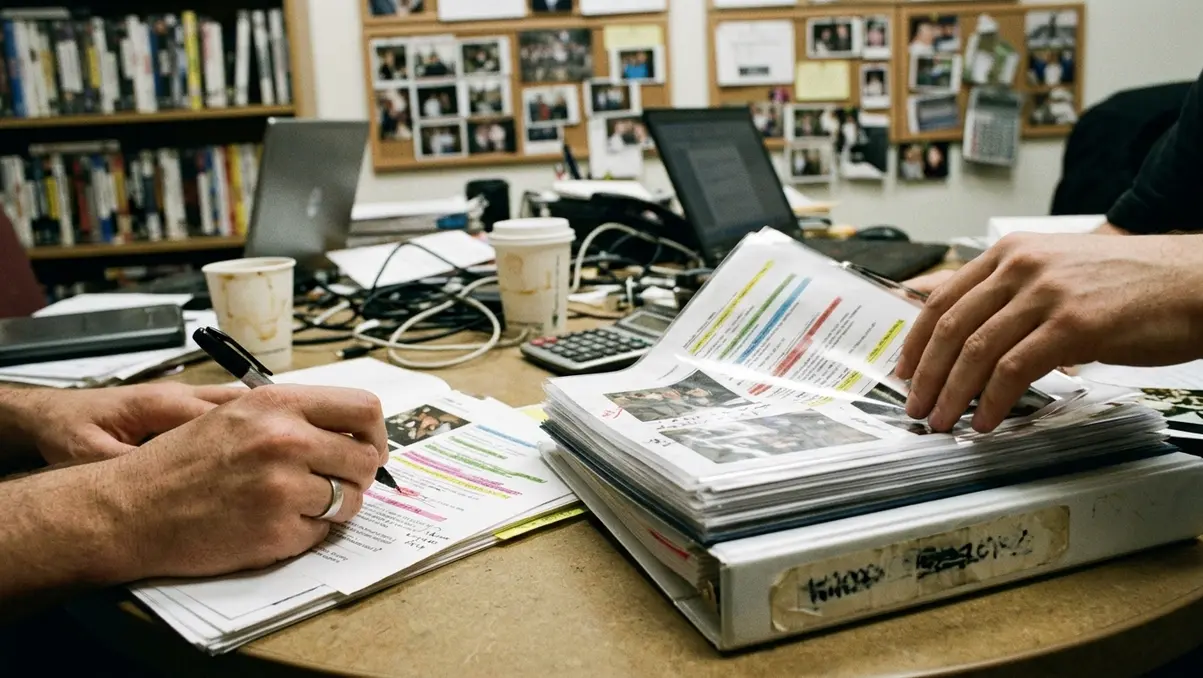
Hollywood has been mistaking on-screen chemistry for off-screen romance since the studio era, when publicity departments booked the dinners and fed the columnists. The isolation protocols of 2020 didn't invent that habit. They compressed it. What used to unfold across a six-month shoot and a publicity tour happened inside a sealed hotel floor in a matter of weeks, and the resulting relationships arrived in entertainment news already fully formed.
The 2020 Production Bubble Sped Up an Old Studio Habit
From mid-March through the end of 2020, film sets ran on mandatory two-week quarantine periods and color-coded restricted zone systems. Crew members lived in tiers. Actors who touched each other on camera were kept in the same bubble as a matter of insurance policy, and everyone outside that bubble became, functionally, unreachable.
Compare that with the studio era, when romance between leads was a line item. Publicity departments arranged the dinners, tipped the columnists, and occasionally invented the whole thing to sell a release date. The chemistry was an asset to be managed.
Drawing on a mapping of studio-era publicity practice against modern paparazzi archives, the editorial team found the mechanism has inverted. Nobody needed to manufacture proximity in 2020; the health protocols did it, and freelance photographers with long lenses handled the documentation for free. Two productions from that year illustrate the shift with unusual clarity: Deep Water, a claustrophobic psychological thriller shot largely in one place, and Mission: Impossible – Dead Reckoning Part One, a globe-trotting action blockbuster that carried its own bubble from country to country.
Bubble Arithmetic
Two weeks of quarantine plus a color-coded zone system produces a simple social outcome: your castmates become your entire in-person world. Read the relationships that follow as a function of that math, not as a plot development.
Deep Water, and What the Long Lenses Recorded
Ben Affleck and Ana de Armas met in November 2019 on the set of an erotic psychological thriller about a marriage curdling into suspicion. The work was intimate by design and largely interior. Researchers reconstructed the relationship timeline by cross-referencing official production call sheets against archived street style photography, tracking the window from November 2019 through the following April.
The interesting break comes in March 2020. A closed set is invisible; lockdown Los Angeles was not. The couple's daily neighborhood walks put them in open air, on public sidewalks, at predictable hours, and freelance photographers deployed long-range telephoto lenses to capture what became one of the year's defining street style motifs: matching quarantine outfits, coffee cups, a dog, the same two people at the same time each afternoon.
The Sidewalk Was Never Neutral
One caution belongs in the middle of this, not at the end. A timeline built from observational paparazzi captures is only as reliable as the behavior it observes, and celebrity street style photography is inherently performative. Subjects who know a camera is parked down the block curate what they wear and when they leave the house. The walks confirm a pattern of togetherness; they cannot confirm the emotional interior anyone assigned to them.
Telephoto Caveat
Matching outfits are evidence of coordination, and coordination can mean affection or styling. Treat repeat looks as a data point about visibility, not a reading of feeling.
Chartered Flights, Hotel Buyouts, and a Bubble That Kept Moving
Christopher McQuarrie began shooting Mission: Impossible – Dead Reckoning Part One in Venice in February 2020, which meant the production met the pandemic head-on and then engineered its way through it. From late February through December of that year, the film maintained strict international travel bubbles using chartered flights and complete hotel buyouts. The cast and crew moved as a single sealed unit across borders.
By December 2020, dating rumors around Tom Cruise and Hayley Atwell were circulating out of London and Rome, sourced to the usual mix of on-location sightings and unnamed insiders.
The environmental contrast with Deep Water is the whole story. One set produced intimacy through stillness: a confined location, psychologically heavy material, long days spent rehearsing suspicion and desire. The other produced it through momentum — stunt rehearsals, chartered departures, a bought-out hotel in a city where nothing else was open. Different pressure, same output. Both environments strip away the ordinary social life that normally dilutes workplace closeness.
Follow The Itinerary
When a set romance surfaces from an action shoot, check the location log before the gossip. Chartered flights and buyouts tell you who had access to whom, and that constraint usually explains the story better than any anonymous quote.
Reading Set Romances Through a Sociological Lens
A workable framework already exists, and it comes from verification practice rather than speculation. Across 2020 and 2021, analysts cross-referenced social media posting timestamps against official daily production schedules to establish whether claimed off-screen interactions were even possible. That method is available to any reader with a search bar and some patience.
So here is the recommendation worth acting on. Stop reading these relationships as extensions of the films and start reading them as outcomes of extreme workplace isolation, because that is what the protocols of 2020 actually built. When the next set romance breaks, do three things: locate the production schedule, identify the isolation conditions, and ask who else that person was physically permitted to see. If the answer is "almost nobody," the story is a labor story wearing a romance headline, and the tabloid version of it deserves exactly as much weight as the studio-arranged dinners of seventy years ago — which is to say, very little.
Your Thoughts
No comments yet. Be the first!
Your Comment