


From Darkroom Dodging to the Uncanny Valley: The Core Shift in Print
The immaculate cover face has begun to look strangely inexpensive. Skin without variation, identical catchlights, a jawline polished into a continuous curve: these treatments now share a visual language with the phone filters available to almost anyone. Texture carries a different signal. A freckle or an uneven cheek highlight suggests that the photograph preserves something particular about its subject.
The editorial verdict is a reversal of prestige: hyper-retouched perfection has lost cultural currency, while tactile photography increasingly communicates confidence. That describes a direction in cover aesthetics, rather than a universal publishing standard. Commercial obligations still shape how far an individual magazine can move.
The history matters. Mid-century darkroom dodging and burning altered local exposure, directing attention toward a face or holding detail in a bright garment. Those interventions could be substantial, but photographers worked through the physical behavior of light-sensitive materials. The desktop retouching boom of the late nineteen-nineties made selective reconstruction much more flexible. Skin could become a collection of independently editable surfaces.
Automated smoothing extended that logic. A technique intended to resolve an isolated distraction became a default treatment for an entire face. Eventually, the finish itself began competing with the person.
Three pressures explain the retreat:
- Audience visual literacy: readers recognize repeated pores, distorted edges, and implausibly even skin tones.
- Celebrity image approval: talent representatives have reason to resist edits that weaken a subject's recognizability.
- Analog editorial photography: renewed interest in medium-format roll film gives grain, tonal variation, and physical texture a prominent place on set.
I read these pressures as a change in what an expensive image must demonstrate. Technical control remains essential; the desirable result now leaves room for the subject to remain visibly human.
Frequency Separation and the Erasure of Human Bone Structure
Frequency separation offers a useful starting point because its underlying logic is reasonable. The workflow separates fine detail from broader transitions in color and tone. A retoucher can address a small blemish without disturbing the surrounding complexion, or adjust uneven color while preserving surface detail.
The trouble begins when that separation becomes permission to rebuild everything.
When Pores Survive but Cheekbones Disappear
On the low-frequency layer, Gaussian blur suppresses detail and exposes broad tonal gradients. Those gradients describe more than pigmentation: they also carry the shadows that make the zygomatic arch, eye socket, and jaw legible. Painting them into uniformity can flatten the face even when its outer silhouette remains unchanged.
The high-frequency layer retains fine texture. Clone-stamping pore patches onto it can produce a technically detailed surface above a face whose underlying volume has already disappeared. The pores seem to float. Enlarging the file reveals detail, yet the portrait still reads as wax because the texture and tonal structure no longer describe the same surface.
Nasolabial folds make the distinction especially clear. Their changing light and shadow help communicate expression and facial volume. Cloning them away removes information. Adding brighter, more symmetrical catchlights can compound the artificiality by giving the eyes a lighting pattern that feels disconnected from the rest of the portrait.
A useful comparison pairs a behind-the-scenes frame from the set with the finished cover. Under studio strobes, a cheek projects, the jaw casts a shadow, and the face turns through space. In the flattened version, the transitions approach one another in brightness. The subject's architecture becomes harder to read.
Visible pores alone cannot establish restraint. The stronger criterion is coherence: skin texture, facial shadows, and reflected light should plausibly belong to the same face under the same lighting.
How Unfiltered Paparazzi and Red Carpet Wires Broke the Illusion
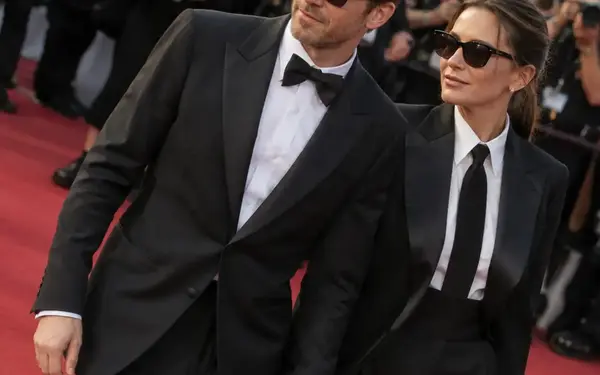
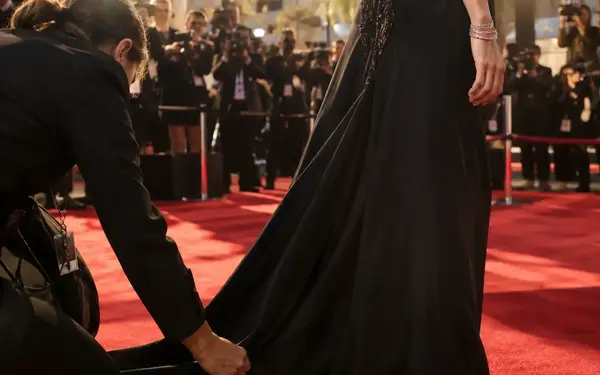
A monthly cover now enters a crowded visual record. By publication, readers may already have seen the celebrity arriving at a venue, standing at a red carpet step-and-repeat, and walking away through a cluster of photographers. Entertainment news places those images within easy reach of the carefully finished portrait.
The timing changes the cover's authority. Agency photographs circulate rapidly; print production takes much longer. A magazine can control its selected frame, crop, and typography, but it cannot control the surrounding evidence of how its subject looks.
That comparison invites scrutiny. Readers can place a cover beside a candid street style photograph and inspect the cheek width, smile lines, or shape of an eye. A bent background vertical may expose geometric warping more clearly than the altered face itself. Heavy retouching becomes material for a circulating comparison rather than an unquestioned aspirational image.
Wire and paparazzi photographs still require interpretation. Lens position, hard light, expression, and image processing can change how a face appears; an agency frame does not provide a neutral measurement of someone's anatomy. The persuasive comparison examines several visible relationships rather than declaring one unflattering frame the truth.
The Tension a Controlled Studio Can Lose
A locked-down digital studio shoot offers repeatability: stable focus, consistent illumination, and close inspection during capture. Those advantages can produce exacting portraits. They can also encourage teams to remove every interruption until the image has little left to discover.
On-location film photography allows a different set of relationships. A stray hair crosses a cheek; movement softens the edge of a sleeve; grain remains visible across an expanse of skin. These elements give the eye competing points of attention. The photograph holds an encounter rather than presenting an entirely resolved surface.

Film cannot guarantee that quality. A retoucher can smooth a scanned negative, and a digital portrait can preserve every expressive irregularity. The decisive choice concerns what the team allows to survive.
The Return of Contact Sheet Honesty on the Newsstand
The emerging editorial agreement begins before the retouching file opens. Talent representatives, photographers, and art directors can settle the permitted interventions during image approval, select a contact-sheet frame, and restrict the work that follows. Visible texture then becomes a production decision with an agreed boundary.
Color Approval Without Facial Reconstruction
That boundary needs precise language. A global color grade changes the image's overall palette. CMYK preparation translates it for print. Dust spotting removes a capture artifact. Restrained local dodging and burning adjusts exposure within an agreed limit. Each task differs materially from using Liquify to displace pixels and reshape a cheek or cloning away a fold.
A meaningful non-retouching rider distinguishes these operations. It can prohibit geometric displacement while allowing color preparation and narrowly bounded exposure corrections. Calling every intervention “retouching” obscures the decisions that matter most to facial recognizability.
Freckles and laugh lines gain visual value within this arrangement because they preserve specificity. Heavy film grain also makes the image's material character conspicuous. In a visual culture saturated with inexpensive smoothing filters, leaving such features intact can communicate confidence in the subject and the photograph.
The commercial division remains consequential. A cover shoot that also supplies skincare advertising may face complexion requirements that an independent editorial commission escapes. Adjacent uses of the same photographs can therefore pull the production toward incompatible finishes.
When a magazine next asks you to admire a flawless cover face, will you reward the polished surface or the portrait that preserves the person's recognizable features?









Your Thoughts
No comments yet. Be the first!
Your Comment