

On December 13, 2020, a streaming platform dropped a fifteen-minute mini-movie in which Mario Lopez played Colonel Harland Sanders as a brooding culinary heartthrob. It was called A Recipe for Seduction. It had a love triangle, a scheming mother, and a subplot involving stolen fried chicken. Viewers laughed, screenshotted, and shared it — and in doing so completed the transaction the brand had designed.
A Colonel, a Sitcom Star, and Fifteen Minutes of Prime Time
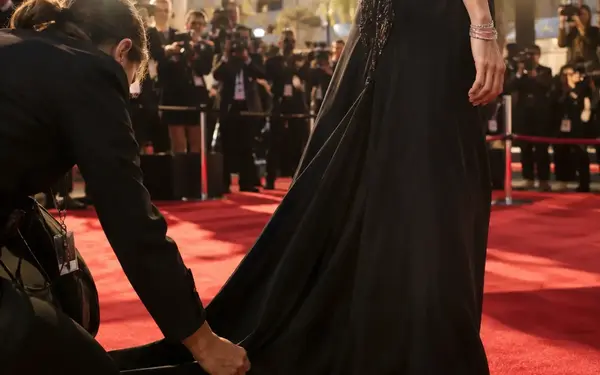
The obvious opening for a piece about celebrity commodification would be an awards-season step-and-repeat, all borrowed jewels and rehearsed spontaneity. That version of the story is too polite. The Lopez mini-movie sits at the far edge of the spectrum, where a recognizable television personality lends his romantic-lead equity to a fast-food mascot for a quarter of an hour, and the result circulates as entertainment rather than advertising.
Which is the point. Modern celebrity culture has thinned the membrane between a person's private life and the public appetite for it until the two are functionally the same product. A romance becomes a merchandising cycle. A weekend outfit becomes a brand statement. A marriage becomes, eventually, a court exhibit.
Three areas show this most clearly: the high-fashion endorsement machine that attaches luxury objects to personal milestones, the legal system that now adjudicates who gets to narrate a private relationship, and the advertainment format that skips the pretense entirely and casts the celebrity as content.
The Gigli Set and the 6.1-Carat Precedent
Trace the current shape of the celebrity relationship spectacle backward and it keeps arriving at 2002, on the set of Gigli, where Jennifer Lopez and Ben Affleck met while making a film almost nobody remembers for its screenplay.
What followed rewrote the playbook. Between November 10 and November 24 of that year, the engagement went public, and with it a piece of jewelry that became its own media object: a 6.1-carat pink diamond from Harry Winston. The stone did more press than most supporting actors. Coverage of the couple routinely led with the carat weight and the jeweler's name, which meant a luxury house had effectively been written into the emotional narrative of two strangers' engagement.
That fusion is the blueprint. A private milestone acquires a brand attached to it, the brand acquires narrative warmth in return, and the paparazzi economy handles distribution at no cost to either party. Every subsequent decade of relationship coverage — the airport arrivals, the ring-finger close-ups, the strategically ambiguous restaurant exits, runs on infrastructure that got its stress test in late 2002.
The photographers of that era were not documenting a romance so much as harvesting one. Each frame carried a caption-ready detail, and each detail carried a price tag that readers could look up.
Blazers, Ball Caps, and the Kristen Stewart Archive
Twenty years later the mechanism still runs, but the aesthetic has changed and the participants are far more fluent in how the images will be read.
Kristen Stewart and Dylan Meyer were first publicly linked on August 16, 2019. By September 24, 2020, the coverage had thickened into heavy syndication: the same coffee runs and dog walks recycled across outlets, timestamped and archived. Drawing on candid entertainment photography from that thirteen-month window, catalogues count upward of fourteen distinct street style looks in which tailored blazers were paired with casual caps, sneakers, and worn denim.
Stewart's position as a Chanel brand ambassador makes that catalogue more than a wardrobe log. Her androgynous approach — menswear tailoring cut against womenswear proportions, a structured jacket undercut by a beat-up ball cap, communicates identity in a visual language the fashion press can decode instantly. Each sidewalk photograph functions as an unpaid editorial for a legacy French house while reading, to most viewers, as a woman simply leaving her apartment.
Reading The Cap
Street style photography rewards contradiction. A blazer signals control and access; a cap signals refusal. Worn together, repeatedly, across a documented year of sightings, the combination stops being an accident of laundry day and starts reading as a position.
The word that keeps surfacing in this territory is authenticity, though what the archives capture is closer to curated authenticity. The moments are real. So is the awareness of the lens. Both things sit in the same frame, and the fashion archive that results is now searchable, sortable, and permanent in a way no 2002 tabloid clipping ever was.
When the Op-Ed Became Evidence
Public intimacy has a downside register, and its documentation is not glossy.
Johnny Depp and Amber Heard married on February 3, 2015. On May 23, 2016, Heard filed for divorce and obtained a temporary restraining order. Those two dates bookend fifteen months that were covered relentlessly while they happened, largely as tabloid material — sourced quotes, blurry photographs, anonymous friends.
The material changed category on December 18, 2018, when The Washington Post published an op-ed under Heard's byline. What had been gossip became a published text with a date, a publisher, and a discoverable editorial history. Depp sued for defamation, appearing as plaintiff; Heard responded as defendant and counterclaimant. The private relationship was now a docket entry, argued in front of cameras, with exhibits.
Where The Record Stops
This examination stays strictly within the intersection of media publication and legal filings — publication dates, court roles, procedural milestones. The emotional realities of the people involved sit entirely outside what public documentation can honestly speak to, and no reading of a filing schedule should pretend otherwise.
The methodological line matters because the two categories behave differently. A paparazzi-driven relationship milestone can be sorted by timestamp and outfit. A courtroom-documented claim carries evidentiary standards, burdens of proof, and financial consequence. Treating the second like the first is how audiences end up mistaking a trial for a season of television.
The Colonel Sells Romance; the Court Prices It
Advertainment, as a strategy, dissolves the boundary between narrative entertainment and commercial branding until viewers stop noticing which one they are consuming. KFC's contribution took a deceased founder, restyled him as a romantic lead with cheekbones, and handed the role to Mario Lopez, whose public persona — pushing thirty years by then — did the heavy lifting the script could not.
The genius of it is economy. Fifteen minutes, one recognizable face, zero pretense that this is anything other than a chicken commercial — and audiences watched anyway, because the format flattered them into thinking they were in on the joke.
The Fifteen-Minute Lesson
When a fast-food chain can cast a celebrity persona as a fictional lover and call it programming, the celebrity persona has become raw material. What gets sold is not a performance but a set of associations the public built for free.
Set that against the other end of the same period. Public figures pursuing a defamation per se claim must clear the actual malice standard — proof that a statement was published with knowledge of falsity or reckless disregard for the truth. That is a demanding threshold, and it exists precisely because public figures trade in visibility.
Here is the reframing fact. The stretch between late 2020 and mid-2022 contains both the December 13 premiere of a fifteen-minute branded romance and the conclusion of a defamation trial whose central exhibit was a single op-ed published December 18, 2018. Roughly eighteen months separate a chicken company monetizing celebrity intimacy as comedy from a jury assigning legal and financial weight to celebrity intimacy as testimony. Same era, same appetite, wildly different invoices.








Your Thoughts
No comments yet. Be the first!
Your Comment